
He could have blazed a trail that few Indian judges had. It was a missed opportunity of a lifetime, notes Ramesh Menon.
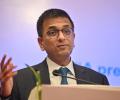
Besides launching initiatives for technological, administrative and infrastructural improvement, Chandrachud, like his illustrious father Y V Chandrachud, who was the Chief Justice of India for the longest time from February 22, 1978 to July 11, 1985, kept delivering significant verdicts in the last one year.

He would have a tenure of two years and is due to retire on November 10, 2024.
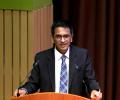
Justice Chandrachud will serve as the CJI for two years till November 10, 2024.

Counted as a judge who enriched the 'verdict docket' of the apex court, Justice Chandrachud is viewed as sharp, articulate and forward looking.
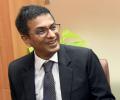
The Supreme Court on Monday said it will organise its first 'hackathon' event to identify innovative ideas and explore practical propositions for refining and bringing in efficiency in the existing process from 'filing to listing' of judicial matters.

Dhananjaya Y Chandrachud, however, had no qualms about overturning the judgements of father Y V Chandrachud on hot- button issues like adultery and the right to privacy.

President Droupadi Murmu administered him the oath at a brief ceremony held at the Rashtrapati Bhavan.

He will take oath on November 9, a day after incumbent CJI Justice Uday Umesh Lalit demits office on attaining the age of 65.

The CJI got irked when the lawyer first sought an early hearing of his case and, after being told that it will be listed on April 17, asked for liberty to mention it before another bench.

The first five courtrooms of the Supreme Court have become WiFi-enabled, Chief Justice of India (CJI) D Y Chandrachud announced on Monday, in a significant step towards the digitisation of the top court.

'As it happens in any society, when progress happens, hate also comes out.' 'There is always a bit of a risk and possibility of rejection, particularly by an orthodox section of society.'
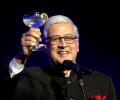
'I think my first obsessive, possessive and only half-requited -- as we would joke -- 'love' was Ivan. I saw him first slouching down the corridor of St Stephen's College nearly 50 years ago and was instantly smitten (as was everyone else around him).'

Words like eve-teasing, prostitute, and housewife may soon be out of the legal lexicon and will be replaced by terms like street sexual harassment, sex worker and homemaker.

Supreme Court's Collegium headed by Chief Justice N V Ramana has recommended names of 13 advocates for elevation as the judges of the Allahabad High Court.

Such a course would require a Constitutional Amendment, requiring a two-thirds majority in both Houses of Parliament. Even assuming that the INDIA combine comes to power at the Centre next year, a two-thirds majority in the Lok Sabha could way off the mark for them, observes N Sathiya Moorthy.

The appointments to the Supreme Court and the high courts cannot be speeded up unless both the Judiciary and the Executive agree to a new mechanism which affords both near-parity in decision-making, argues Virendra Kapoor.

Privacy allows people a space where they can refuse to conform. And it is in that space where liberty flourishes.

One of the crucial features of the right to privacy judgment is the understanding that democracy is founded on pluralism and diversity, and pluralism and diversity begin in the mind, says Gautam Bhatia.

The judges -- Chief Justice Ranjan Gogoi, CJI-designate Sharad Arvind Bobde and justices Dhananjaya Y Chandrachud, Ashok Bhushan and S Abdul Nazeer -- delivered the verdict in the century-old dispute.
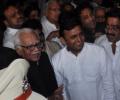
Senior Bharatiya Janata Party leader and former Union Minister Ram Naik was on Tuesday sworn-in as the 27th Governor of Uttar Pradesh at a ceremony held in Raj Bhawan in Lucknow.
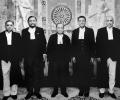
The apex court, which delivered a historic unanimous judgment putting the curtains down on the vexatious legal battle that has torn the social fabric of the nation, said citizens of all faiths, beliefs and creeds 'seeking divine provenance' are both subject to law and equal before law under the Indian Constitution.
The Ayodhya verdict heralds not the beginning of theocracy or Hindu rashtra (that never existed in 5,000 years), but marks the end of a divisive phase of our history.

When an accused gets attacked on the way to court, and again within the court premises, with no intervention by a judicial officer, which space is safe, asks Jyoti Punwani.
